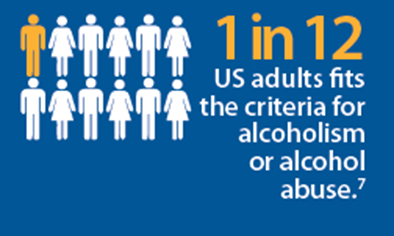
The first step to solving any problem is to define the problem. To define the problem of alcoholic and/or alcoholism we need an operating definition.
This sounds simple and easy enough, aye? Get on your favorite search engine and search for: ‘Official Medical Definition of Alcoholic and Alcoholism.’
On Google – I got 32,100,000 results. Yes. Over 32 million! That means the next problem is: how much time do you have, and would you be officially diagnosed with insanity after reading even 10 of the 32 million results?
Bottomline is: You’re going to get tons of definitions and information-overload laced with a high dosage of academic-pseudo-scientific psych-speak – that could leave you yearning for relief and feeling like “I need a drink!” That could be a traumatic condition to face – if your life depends on not having the next drink.
Why does it have to be so confusing? The short answer: billions of dollars are spent annually on the study, treatment and damage caused by drinking too much alcohol.
Yet, drinking too much alcohol is not the primary diagnosis for determining who is alcoholic and what is alcoholism – even though most alcoholics suffering from alcoholism do, drink too much.
On one side of the room, you’ll have those wanting to control how much an alcoholic should be allowed to drink – and the other side of the room, are those vehemently proclaiming that even one drink is too much!
This reveals vicious cycles of special interest in the need for a definition of ‘alcoholic and alcoholism’ and how much more difficult it becomes for an individual to seek help for a problem with alcohol.
Sum it up to say: healthcare, scientific, pharmaceutical, academia, occupational, professional, political, government, lobbyists, treatment, and the insurance industries each have their own horse in a giant sweepstakes race for the big bucks spent on alcoholism and alcoholics.
Are you still with me?
In the mid-1960’s a financial gold-rush was created for an industry that centered around campaigns to stop smoking, anti-smoking laws, treatment, healthcare and lawsuits. By the early 1980’s – the next financial frontier journeyed into substance abuse, alcoholism and drug addiction treatment and produced an explosive growth in the drug addiction and alcoholism treatment industry.
Big money could be made quickly by offering to help treat problems that have scourged societies for thousands of years – in the backdrop of primarily failed results to successfully address those problems.
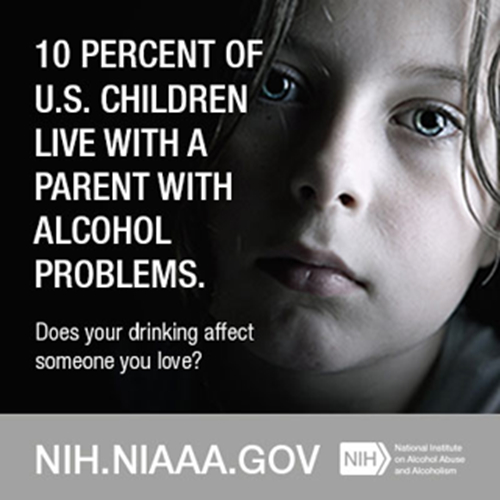
The primary victims (individuals and families) that were suffering the most were not in position to pay for high-cost, unproven, experimental treatment solutions. The secondary victims: employers, communities and governments did not want to pay. The gold was to be discovered in the profit vaults of insurance companies. Insurance companies did not want to pay – because it was an unexpected and unfunded liability and cost for them. And insurance companies became the target for a great transfer of wealth.
Now that a source for enrichment was identified – insurance companies – the treatment industry began lobbying governments and politicians for laws and regulations to make the insurance companies pay for professional treatment services. And when the government and politics get involved – the other industries pile on to divvy up the dough. Lawyers, Politicians. Lobbyists. Legislatures. Scientists. Education. Academia. Licensing boards. And on and on and on.
The alcoholics and addicts who were using free treatment resources that had a proven track-record of success, began referring to it, humorously, as “A $30,000 Big Book Study.” (The cost of the book that most of them used for a recovery program was purchased for $3.25 each, if they went to meetings, those that could afford it would drop a buck in a basket for a donation and participate in one alcoholic helping another alcoholic to recover, as the bases of their own recovery program). They did have a simple definition for alcoholic, alcoholism, drug-addict, and addiction. (I’ll expound on that definition in a different article – since this one focuses on an ‘Official Medical Definition’ of Alcoholism and Alcoholic.
The health insurance companies under attack to make them pay for the services claimed that problem drinking, and drug use and abuse had been with us for centuries and it was deemed a social, societal, and moral problem and not a health problem.
While the first U.S. Surgeon General, Benjamin Rush, referred to a drinking problem as being a ‘disease’ – he had no proof to show, so while a few others in professional and medical circles suspected it could be a condition of a disease – there was no physical evidence to back it up.
What was done to ‘fix it’? The activist’s brains summoned the assistance of the medical community to define ‘substance abuse’ as a disease and the AMA and the American Board of Psychiatry got on board and labeled it with an official name, Alcoholic and Alcoholism and made up their description to describe the ‘disease’ concept.
They still faced a huge problem: the definitions and diagnoses descriptions were vague. And still no physical proof. No science. No evidence. They based their conclusions on ‘research and survey reporting – and called them studies’. It was kind of like (and still is, to this day) “If it walks like a duck, swims like a duck, quack likes a duck and looks like a duck – it must be a duck. So, treat it like a duck.”
The problem with this approach is: it’s based on perception and not on facts.
Over the last 35 years – they are still at it, modifying and changing the descriptions, diagnoses, labels, and thoughts about an ‘evidence based’ approach to treatment for a condition.
Even the ‘evidence-based’ treatment models are based upon ideology, opinion, philosophy, conjecture, suggestion, survey, and perception around studies — that are non-scientific physical evidence.
I believe the meaning is well intended to have a ‘label, definition, description and diagnosis.’ But as O.J.’s lawyer reminded us about a particular glove – ‘if it doesn’t fit you’ve got to acquit.’
The below definition of Alcoholism was published by the Journal of the American Medical Association in 1992. This definition was prepared by the Joint Committee to Study the Definition and Criteria for the Diagnosis of Alcoholism of the National Council on Alcoholism and Drug Dependence and the American Society of Addiction Medicine.
It was Approved by the Boards of Directors of the National Council on Alcoholism and Drug Dependence, Inc. (February 3, 1990) and the American Society of Addiction Medicine (February 25, 1990).
Definition of Alcoholism — published by the Journal of the American Medical Association
“Alcoholism is a primary, chronic disease with genetic, psycho-social, and environmental factors influencing its development and manifestations. The disease is often progressive and fatal. It is characterized by continuous or periodic: impaired control over drinking, preoccupation with the drug alcohol, use of alcohol despite adverse consequences, and distortions in thinking, most notably denial.”
Primary refers to the nature of alcoholism as a disease entity in addition to and separate from other patho-physiologic states which may be associated with it.
Primary suggests that alcoholism, as an addiction, is not a symptom of an underlying disease state.
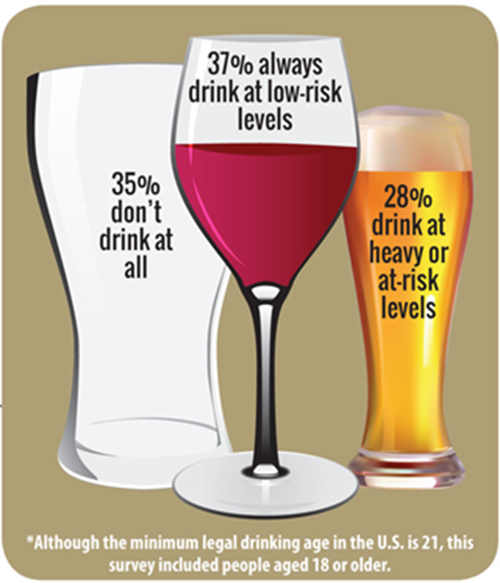
Disease means an involuntary disability. It represents the sum of the abnormal phenomena displayed by a group of individuals. These phenomena are associated with a specified common set of characteristics by which these individuals differ from the norm, and which places them at a disadvantage.
Often progressive and fatal means that the disease persists over time and that physical, emotional, and social changes are often cumulative and may progress as drinking continues. Alcoholism causes premature death through overdose, organic complications involving the brain, liver, heart, and many other organs, and by contributing to suicide, homicide, motor vehicle crashes, and other traumatic events.
Impaired control means the inability to limit alcohol use or to consistently limit on any drinking occasion the duration of the episode, the quantity consumed, and/or the behavioral consequences of drinking.
Preoccupation in association with alcohol use indicates excessive, focused attention given to the drug alcohol, its effects, and/or its use. The relative value thus assigned to alcohol by the individual often leads to a diversion of energies away from important life concerns.
Adverse consequences are alcohol-related problems or impairments in such areas as: physical health (e.g., alcohol withdrawal syndromes, liver disease, gastritis, anemia, neurological disorders); psychological functioning (e.g., impairments in cognition, changes in mood and behavior); interpersonal functioning (e.g., marital problems and child abuse, impaired social relationships); occupational functioning (e.g., scholastic or job problems); and legal, financial, or spiritual problems.
Denial is used here not only in the psychoanalytic sense of a single psychological defense mechanism disavowing the significance of events, but more broadly to include a range of psychological maneuvers designed to reduce awareness of the fact that alcohol use is the cause of an individual’s problems rather than a solution to those problems. Denial becomes an integral part of the disease and a major obstacle to recovery.
–End of definition –
After much argument over the last three decades the definitions continue to change — and there are newer definitions. Perhaps, this is why I get 32 million results in a search engine – when I search for ‘definition of alcoholic and alcoholism.’ Currently, the labels have even evolved and changed to terms like ‘substance-abuse’ and ‘substance disorder’ and the agreements and disagreements about it being a trued, evidence based ‘disease’ rather than referring to it as a ‘condition’.
Over the last ten years, even Alcoholics Anonymous has entered the controversy of ‘disease.’ The co-founder of Alcoholics Anonymous, Bill Wilson, tried to persuade the organization to avoid controversy by suggesting the use of terms such as ‘illness’ or ‘condition’. In his original book Alcoholics Anonymous, he avoids the use of the term ‘disease’ regarding the alcoholic or alcoholism.
Dallas B.
Disclaimer and Notice
This information on ALCOHOLISM AND THE MEDICAL DEFINITION should be considered as educational and informational in nature — and is not intended to be a substitute for professional, medical, or clinical judgment, treatment, or diagnosis.